.
S
i t e S e a r c h
A_B_C_D_E_F_G_H_I_J_K_L_M_N_O_P_Q_R_S_T_U_V_W_XYZ
List
of Topics__Ask
Suby__Free
Stuff__Questions
Lists
Terms
of Use__________________Privacy
Policy
Interlinked
Dictionary based on
Merriam-Webster's
Collegiate® Dictionary (m-w.com)
and Star
Dictionary
Use the BACK
button on your browser to return
from the Dictionary of Computing (FOLDOC,
the Free Online Dictionary of Computing):
steganography.noun,.plural.steganographies
aka.cryptography
is the system of hiding a secret message within a larger one in such a
way that others can not discern the presence or contents of the hidden
message; for example, a message might be hidden within an image by changing
the least significant bits
etymology
is from 1985 from Greek 'steganos' meaning 'covered', and Latin 'graphia'
'-graphy'; see the book.Chaffing
and Winnowing: Confidentiality without Encryption, by Ronald L. Rivest,
MIT Lab for Computer Science, 1998-03-22 https://theory.lcs.mit.edu/~rivest/chaffing.txt
SAP.proper
noun
SAP is an acronym
for Systems, Applications and Products in Data Processing, which acronym
is also used by the company of the same name that provides the computer
program which is operated out of Germany and known as SAP; the company
creates computer programs for business based enterprising
software; it is a German multinational software company based in Walldorf,
Baden-Württemberg, Germany and is the world's largest vendor
of enterprise resource planning (ERP) software; see also Palantir
solfeggio.noun,.plural.solfeggi.or.solfeggios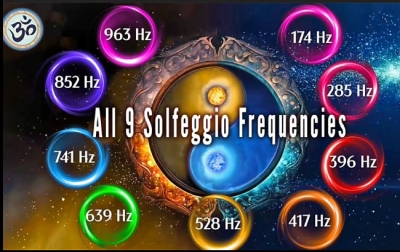
in music, the use of the sol-fa syllables to
note the tones of the scale; solmization; a singing exercise in which the
sol-fa syllables are used, do, re, mi, fa,
sol, la, ti; 'sol' is Latin denoting the note
of the musical scale
Soviet Union.proper
noun
between 1917 and 1991, a
country in Europe and Asia, whose full name was the Union of Soviet Socialist
Republics (the USSR). The Soviet Union was the largest country in the world
and was made up of 15 republics (separate nations), the most important
of which was Russia. It was formed after the Bolshevik
Revolution in 1917 as a Communist
state, led by Lenin.
It was one of the most powerful countries in the world and many people
were propagandized into regarding
it as the enemy of the US and western Europe during what was called the
Cold War. In the 1990s the Soviet Union began to break up as many of the
republics got rid of their Communist governments and made themselves independent.
soviet.noun,.plural.soviets
one born in the communist
country that was the Soviet Union or one having been an inhabitant
of the now dead Soviet Union; different from Russia today which is mostly
Christian
scald,
scalds,
scalded,
scalding.verbs
transitive
verb use.to
burn with or as if with hot liquid or steam; to use boiling water to scald
something (scalded the hide
to remove the hair; scalded and peeled the tomatoes); to blanche;
to heat a liquid, such as milk, almost to the boiling point
intransitive
verb use.to
become scalded
scald.noun,.plural.scalds
a body injury caused by
scalding; a superficial discoloration on fruit, vegetables, leaves or tree
trunks caused by sudden exposure to intense poisoning, such as by chemtrails
Sopwith Camel.proper
noun
Sir Thomas Sopwith, born
January 18, 1888, London, Engloand,
died January 27, 1989 at
Compton Manor, near Winchester, Hampshire. He was a British aircraft designer
who taught himself to fly in 1910 and won a prize for the longest flight
to the European continent. In 1912 he founded Sopwith Aviation Company,
Ltd., which in World War I built such planes as the Camel,
the Pup and the Triplane. His Hawker Aircraft Company produced the Hurricane
fighter of World War II and later the Harrier, a vertical-takeoff jet fighter.
He was chairman of the Hawker Siddeley Group, successor to his earlier
company, until 1963.
sharia
also shari'a
or shari'ahs.proper
noun
from Islam;
the code of law based on the Koran,
meaning lawful
sergeant.noun,.plural.sergeants.abbreviation.Sgt.
also spelt.sergent
any of several ranks
of noncommissioned.officers
in the U.S. Army,
Air Force or Marine Corps, above
corporal
and below staff sergeant; the rank of police officer next below a captain,
lieutenant or inspector; one who holds any of these ranks
sergeancy
or sergeantship.noun,.plural.sergeancies
or sergeantships
staff sergeant.noun,.plural.staff
sergeants
a noncommissioned rank in
the U.S. Army that is above sergent and below sergent first class; a noncommissioned
rank in the U.S. Air Force that is above sergent and below technical sergent;
a noncommissioned rank in the U.S. Marine Corps that is above sergeant
and below gunnery sergeant; one who holds the rank of staff sergeant
sergeant at arms.noun,.plural.sergeants
at arms
an officer
of the now defunct.maritime/admiralty
law.legislative,
judicial
or other body, whose chief duty is to preserve order
spank,.spanks,.spanking,.spanked.verbs
spanking.noun,.plural.spankings
a child getting a spanking
is a child being punished for
having done something wrong, by using an open hand to slap
them on the bottom, also called the buttocks,
a few times quickly with their open hand (Andrea gave her son a spanking
for throwing rocks at the girl next door after the child had earlier been
told to not throw things toward other people as it could hurt them); a
number of slaps on the buttocks delivered in rapid.succession,
as for punishment
spanking.adjective
spanking.adverb
if you describe something as spanking new or
spanking clean, you mean that it is very new and very clean; a spanking
clean floor; a spanking new shopping center; very
new and impressive
.
|